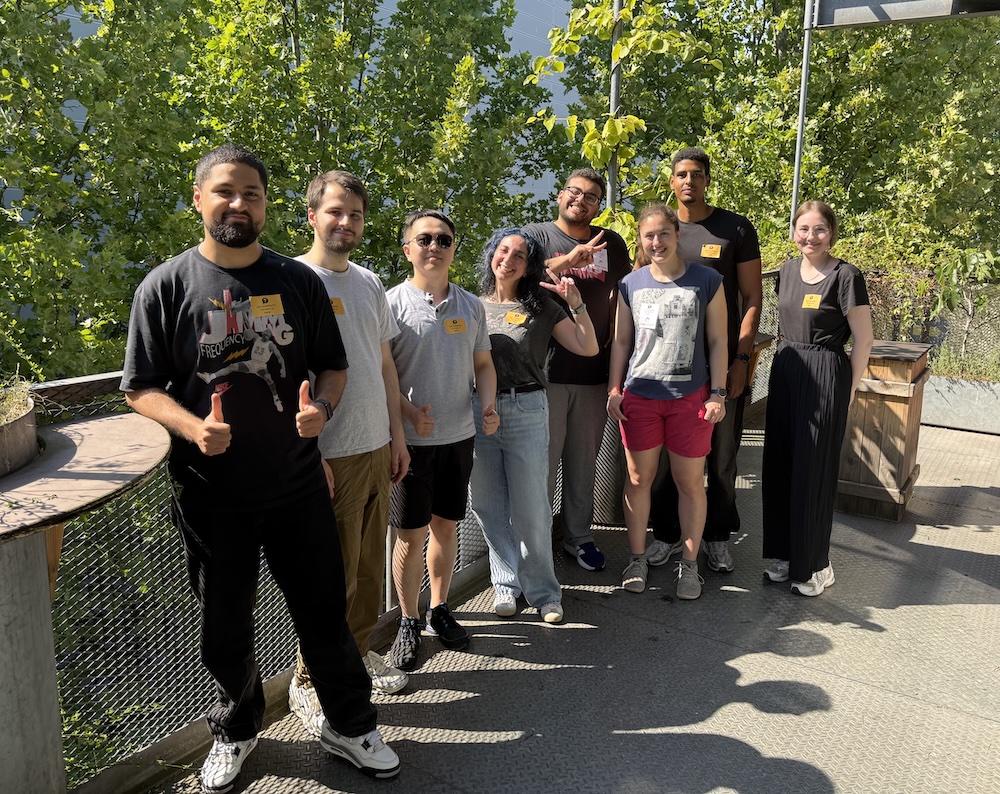
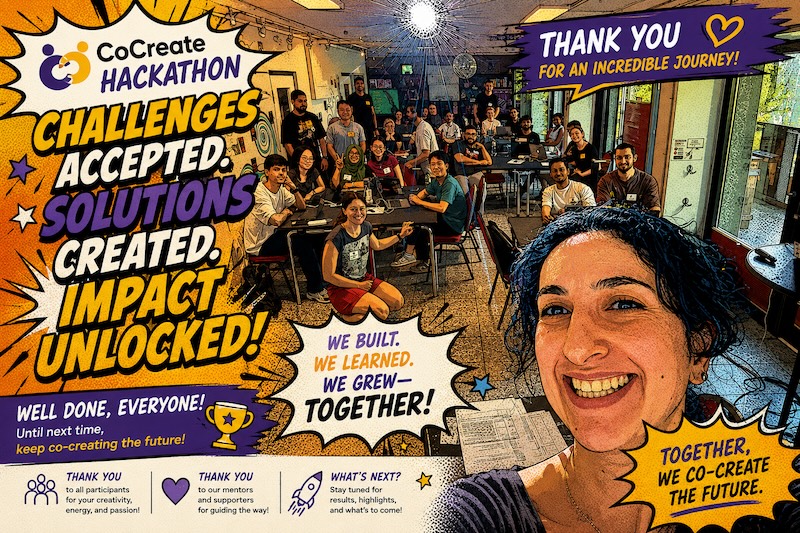
On 19 June 2026, 19 students walked into Unperfekt Haus in Essen with a chatbot concept, a team, and a full day ahead of them. By 16:00, six teams had built, iterated, pivoted, debugged, and presented working Discord bots that tackle real challenges in online community life. We couldn’t be prouder of what they created, or more excited about what comes next.
The Day in Numbers
19 students from across disciplines formed 6 mixed teams, each bringing a different blend of technical and conceptual expertise to the table. They were supported by 8 mentors covering everything from Python and the Discord API to CSCW theory and collaborative group dynamics, as well as a guest expert who offered research-informed feedback on each team’s implementation. From 09:30 to 16:00, across three focused implementation sprints and two structured checkpoints, the room buzzed with exactly the kind of energy we designed this event to generate.
What They Built
The challenge for the day: design and implement a Discord chatbot that supports a specific stage of online community formation or operation. The theme is directly drawn from the Cooperative Systems course of Prof. Dr. Prilla at the Chair of Interactive Systems, University of Duisburg-Essen in which the hackathon was embedded. Teams chose their own community stage to address, whether that was welcoming new members, sustaining long-term engagement, balancing participation across the group, or something else entirely. By the closing presentations, every team had something to show: a working bot, a demonstrated concept, and an honest reflection on what they’d learned from the bits that didn’t go to plan.
Six teams, six demos, and a room full of people who had genuinely accomplished something together (during a heat wave!).
Why We Did It This Way
The CoCreate hackathon is deliberately different from the competitive, prize-driven formats that often dominate the hackathon world. We ran this event in fully cooperative mode: teams were encouraged to share interim results at structured checkpoints, help each other troubleshoot, and treat the day as a collective sprint rather than a race. That design choice reflects both the spirit of the course — which is, after all, about cooperation systems — and the research that underpins the CoCreate project.
The teams themselves were formed intentionally at the start of the semester, mixed by discipline. By the time hackathon day arrived, students already knew each other, had developed their concepts together, and arrived ready to build rather than to plan. The hackathon was the implementation sprint at the end of a longer pedagogical arc, not a stand-alone event dropped into the course from the outside.
Part of Something Bigger
This hackathon is the first of three case studies in the CoCreate project — an Erasmus+ Strategic Partnership bringing together the University of Duisburg-Essen, Aalborg University in Denmark, Eindhoven University of Technology in the Netherlands, and Garage48 in Estonia. Over three years and across three universities in three countries, the project is developing the CoCreate framework: a research-grounded set of design guidelines and decision points that educators can use to design their own educational hackathons and embed them meaningfully in their curricula.
What happened at Unperfekt Haus on June 19 is the first real test of that framework in action. The insights we collect, from the event design itself, from the student experience, and from what the teams actually built, will feed directly into the next iterations of the framework, ahead of Year 2 at Eindhoven University of Technology and Year 3 at Aalborg University.
What’s Next for the Students
The hackathon isn’t the end of the story. The chatbots students built will move into a real-life evaluation phase meaning their work gets tested against actual community scenarios, not just assessed in a presentation. That’s a deliberate design choice too: we want students to experience what it means to build something that connects to real research and real communities!
A Thank You
To the 19 students who gave the day everything they had: thank you. You built something real, you helped each other, and you demonstrated exactly why this kind of learning format deserves a place in university curricula. To the 8 mentors who kept things moving, to Prof. Prilla and the course instructors who brought this all together: this worked because of you.
The next CoCreate hackathon is coming. If you’re an educator curious about running one of your own, stay tuned: the framework, the blueprints, and the tools are all in development, and they’ll be yours to use.